


The first few years of childhood develop much more than we can ever imagine. These are the years during which kids learn to speak, act, understand other people and express their feelings. Along with academics, there’s another skill that deserves just as much attention: emotional intelligence for children.
Emotional intelligence for children involves the ability to understand one’s own emotions, manage them and react to others with compassion rather than impulses. Emotional intelligence is what makes children become calm and responsible adults.
Emotional development is considered just as important as academic performance at Dr. Kishore’s Ratnam Schools. The idea behind this belief is very simple; an emotionally aware child will perform better both academically and socially.
Why Emotional Intelligence Is Important in Early Education
Early education is not only about books and exams. It is also about learning behavior, habits and social skills.
Children with good emotional intelligence:
- Make friends easily
- Follow classroom rules better
- Understand teachers quickly
- Handle small problems calmly
This is why many educators say emotional learning should start from the beginning, especially in pre primary school in Nellore and early classes.
When children learn emotions early, they become more stable and confident in life.
Emotional Intelligence Builds Confidence
Confidence matters a lot for young children, and it starts with understanding their own emotions. When a child feels safe with what they are feeling, that confidence shows up everywhere.
An emotionally aware child will usually:
- Speak up without hesitating
- Join in on class activities
- Try new things without being scared to fail
They are not afraid of getting things wrong because they have learned that mistakes are just part of figuring things out. And that mindset carries over into how they perform in studies and everyday life.
Helps in Making Friends and Social Skills
Kids spend hours every day around classmates and emotional intelligence is what makes those relationships work. It teaches them things like:
- Sharing toys and belongings
- Waiting their turn
- Speaking politely
- Sorting out small disagreements on their own
Instead of fighting over a toy, a child with strong emotional skills is more likely to share it or take turns without being told to. These small habits matter a lot, both at school and later in life.
Improves Classroom Behavior
Children who understand emotions behave better in class.
They are more likely to:
- Listen to the teacher
- Follow instructions
- Stay quiet when needed
- Respect classmates
This creates a peaceful and positive classroom environment where all students can learn properly. Teachers also find it easier to guide such students.
Helps Children Learn Better
When children are emotionally calm, their minds are more open to learning.
A child with strong emotional intelligence can:
- Focus better in class
- Understand lessons easily
- Remember what they learn
But when children are upset or angry, they cannot focus properly.
So emotional balance directly supports better learning in school.
Emotional Intelligence in Early Education
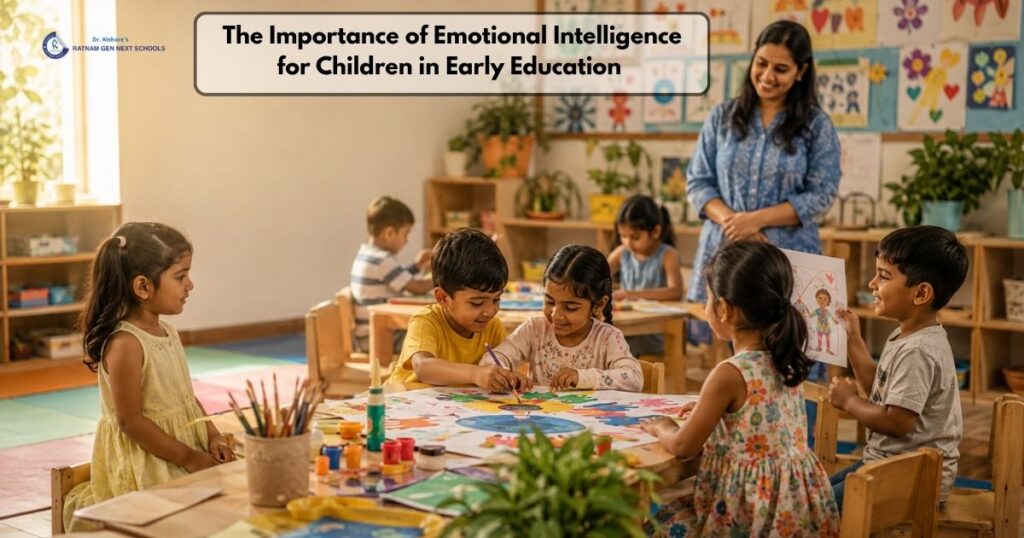
Early education is the best time to build emotional skills. In pre primary school in Nellore, children learn through play, stories and group activities.
Some simple examples:
- Playing in groups teaches sharing
- Storytelling teaches understanding feelings
- Drawing activities improve expression
- Classroom routines teach discipline
These activities help children understand emotions in a natural and simple way.
Role of Schools in Emotional Development
Schools play a big role in building emotional intelligence.
At Dr. Kishore’s Ratnam Schools, teachers focus on creating a caring and supportive environment.
They use simple methods like:
- Story sessions that teach values
- Group games and activities
- Encouraging children to express feelings
- Teaching how to handle small problems
- Appreciating good behavior
These methods help children learn emotional skills without pressure.
The school believes that a happy child learns better than a stressed child.
Emotional Intelligence vs Academic Learning
Many parents think only marks are important. But emotional intelligence is equally important.
Here is a simple comparison:
| Academic Learning | Emotional Intelligence |
| Reading and writing | Understanding feelings |
| Memorizing lessons | Managing emotions |
| Getting marks | Building behavior |
| Exams success | Life success |
Both are important, but emotional intelligence helps children use their knowledge in a better way.
Role of Parents in Emotional Growth
Parents also play an important role in developing emotional intelligence.
They can:
- Talk to children about feelings
- Listen carefully when children speak
- Teach them to stay calm
- Show good behavior at home
- Appreciate small efforts
When parents support emotional learning, children grow faster and better.
Long-Term Benefits of Emotional Intelligence
Emotional intelligence for children is not only useful in school. It helps children throughout life.
Children with strong emotional skills often become:
- Confident students
- Good team players
- Responsible adults
- Calm problem solvers
These skills help them in college, jobs and personal life.
Why Schools Like Dr. Kishore’s Ratnam Schools Focus on Emotional Intelligence
Modern education is not only about marks. It is about building strong human beings.
Dr. Kishore’s Ratnam Schools focus on both academics and emotional development. The goal is to help children grow in a balanced way.
By teaching emotional intelligence to children, the school helps students:
- Become confident
- Improve behavior
- Build friendships
- Learn with interest
- Handle emotions better
This is one reason why parents consider it among the best schools in Nellore.
The school also supports early learning programs in pre primary school in Nellore, where emotional growth starts from the beginning.
Conclusion
One of the greatest skills that a child can develop during early stages of life is emotional intelligence. Emotional intelligence helps kids to be more aware of themselves, behave well in front of others and develop meaningful relationships with others.
Children who grow with emotional awareness are likely to become more self-assured, concentrated and prepared to study, which will definitely help them in both education and personal development. Such schools like Dr. Kishore’s Ratnam Schools recognize this and teach emotional intelligence through their regular curriculum.
Frequently Asked Questions
What is emotional intelligence for children?
Emotional intelligence for children means understanding their own feelings and learning how to manage them. It also helps children understand and respect the feelings of others.
How can parents develop emotional intelligence in children?
Parents can talk openly about feelings, listen to their children, encourage kindness and help them solve problems calmly. Simple daily conversations can make a big difference.
Can emotional intelligence improve a child’s academic performance?
Yes. Children who can manage their emotions often find it easier to focus, listen to teachers, participate in activities and handle challenges during learning.
How do schools teach emotional intelligence?
Schools can use storytelling, group activities, role-play, classroom discussions and games to help children understand emotions and develop better social skills.