


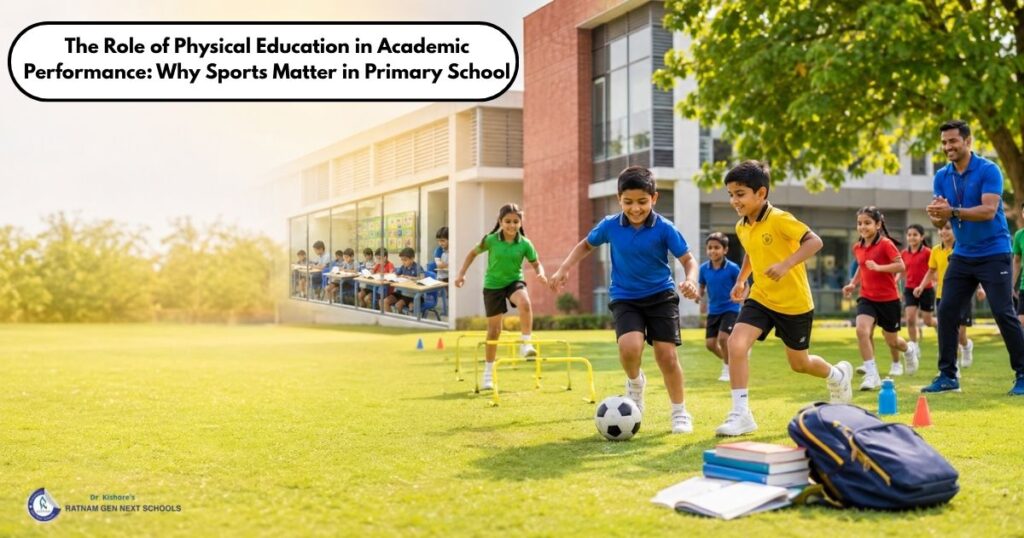
When parents think about their child’s education, it is always academics that come first. However, besides reading, writing, math, tests, and grades, there are other things that children must learn to become healthy and confident individuals.
Sports and physical education play an equally important role in a child’s life at school. Engaging in running, games, practicing any sport and participating in various physical exercises will not only keep the child fit, but it will also teach them some skills, which include teamwork, discipline, and confidence.
These physical education benefits become even more relevant during the primary school period when children develop both physically, socially and emotionally.
Why Is Physical Education Important in Primary School?
Physical education is the part of school that helps kids stay active and build their physical skills. It can include things like:
- Running and outdoor games
- Team sports
- Fitness activities
- Simple exercises
- Sports competitions
- Games that need balance and coordination
For young children, it should never feel like a hard subject to study. It should be a time to move around, have fun, learn new skills, and enjoy time with friends.
How Sports Can Support Academic Performance
Sports and academics may seem like two completely different parts of school life. However, the two can work well together.
Students who participate in physical activity will have chances to learn about focus, discipline, goal setting and determination. The same applies to students in the classroom.
Better Focus and Concentration
Young children can find it difficult to sit and concentrate for long periods. Regular movement gives them a chance to use their energy in a positive way.
After physical activity, children may feel refreshed and ready to return to classroom activities. Regular exercise can also support attention and concentration.
This does not mean sports should replace study time. Instead, a healthy balance between learning and movement can make the school day more enjoyable.
Learning the Value of Practice
A child rarely becomes good at a sport after playing it once. They need to practise, make mistakes, and try again.
The same idea applies to academics.
A child learning multiplication, reading, or writing may not understand everything immediately. Sports can help children understand that improvement takes time and effort.
This is one of the ways sports and academic performance can be connected.
Helps Children Stay Healthy
Children need regular physical activity as they grow.
Some of the things that can be improved through sports and physical education are:
- Physical strength
- Endurance
- Balance and coordination
- Physical skills
- Activity habits
All of the above is especially important for children who spend too much time sitting, watching television or playing on their phones.
Schools are places where children have opportunities to engage in physical activities during the day.
Teach Teamwork and Communication
Team games give children a natural opportunity to interact with others.
They learn to:
- Listen to teammates
- Share responsibilities
- Follow rules
- Communicate clearly
- Respect other players
- Work towards a common goal
These skills are useful outside the playground too. Children use communication and teamwork when working on classroom projects, participating in activities, and making friends.
Sports therefore give children practical opportunities to develop social skills.
Discipline and Responsibility
Good performance in sports requires regular practice and commitment.
Children learn that they need to:
- Follow instructions
- Attend practice regularly
- Take care of the equipment
- Respect rules
- Manage their time
- Keep trying when something is difficult
These habits can also help children approach their studies with greater responsibility.
A child who learns to practise regularly for a sport may also begin to understand the value of regular study.
Learning to Handle Winning and Losing
Sports give children something that textbooks cannot always teach: real experiences with success and failure.
A child may win one game and lose another. They may perform well one day and make mistakes the next.
These experiences teach children that losing is not something to be ashamed of. They can learn from mistakes, accept the result, and try again.
This is an important life lesson that can also help children handle difficult subjects, lower marks, or other challenges at school.
Sports at Dr. Kishore’s Ratnam Schools
Sports are seen as an important aspect of a child’s educational process at Dr. Kishore’s Ratnam Schools. The school holds Sports Day programs that enable children to engage in sporting activities that help them develop physical skills, increase confidence, and experience good competition.
Sports form an essential part of the school’s holistic learning methodology. In addition to academic studies, the sports programs at the school are designed to help support values like teamwork, leadership, discipline, and sportsmanship.
For parents who are looking for the best schools with sports in Nellore, this combination is one of the most important factors.
Final Thoughts
Education is not all about grades and performance in tests. Children should be given chances to improve themselves physically and psychologically in terms of confidence, communication, discipline, and cooperation.
Physical education provides for most of these aspects. Sports can also complement academic learning by helping children develop focus, patience, and a willingness to keep trying.
A balance of academics and sports activities would contribute to making schooling for young students meaningful.
In Dr. Kishore’s Ratnam schools, sports and extracurricular activities take place within a larger framework of nurturing the children’s overall growth. This is done in order to provide them with learning opportunities not only in the class but also in activities out of it.
Frequently Asked Questions
What are the main physical education benefits for primary students?
Physical education can help children improve fitness, coordination, confidence, concentration, teamwork and discipline while developing healthy habits.
Can sports improve academic performance?
Sports can support skills such as concentration, discipline, persistence and time management, which can also be useful for academic learning.
Why is PE important in schools?
The importance of PE in schools goes beyond exercise. It gives children opportunities to develop physical, social, emotional and practical life skills.
What should parents look for in schools with sports?
Parents should check whether a school offers regular sports activities, suitable facilities, sports events and opportunities for children to participate while maintaining a good balance with academics.