


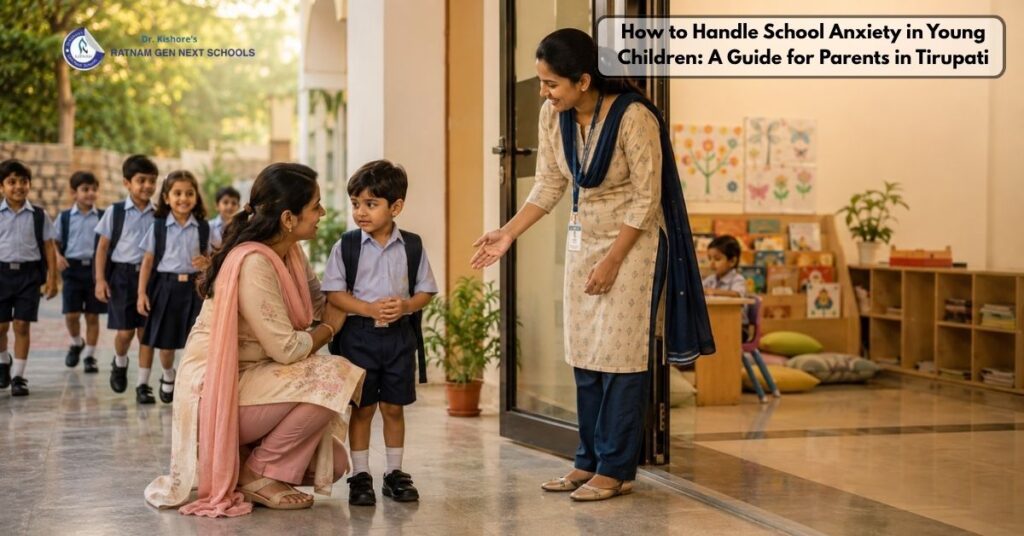
Going to school for the first time is a big change for a little child. Some kids get excited. They can’t wait to make friends, play games, and learn new things. But other kids feel scared. They may cry or beg to stay home.
Knowing how to support children with school anxiety can help parents make school feel safer and more comfortable. With patience, encouragement, and support from teachers, most children can gradually become more confident.
What Is School Anxiety in Children?
School anxiety just means a child feels scared, worried or nervous about school. They might be scared to leave their parents. They might be scared of new friends, new teachers or a new place.
Some kids will tell you they don’t want to go. Other kids don’t know how to say what they feel; they just act upset.
Common signs can include:
- Crying or getting upset before school
- Not wanting to get dressed or ready
- Saying their tummy or head hurts
- Being very quiet
- Not sleeping well the night before school
- Asking again and again when they can go home
- Holding on tightly to you at school
- Not wanting to join in activities
Why Is My Child Afraid of School?
There can be many reasons a child afraid of school may feel this way.
A child could be worried about a new teacher, an unfamiliar classroom, difficult lessons, making friends or being away from their parents. Sometimes a small event that seems unimportant to an adult can feel very big to a young child.
For younger children, separation is often the biggest concern.
Understanding the reason behind the fear is more helpful than simply telling a child not to be scared.
Understanding Separation Anxiety at School
Separation anxiety school concerns are common among young children, especially when they are starting school for the first time or moving into a new class.
A child may cry when a parent leaves, hold on tightly or repeatedly ask the parent to stay.
Parents can help by creating a predictable goodbye routine. Keep the goodbye warm but short. Tell your child when you will return and reassure them that they are safe.
Avoid leaving secretly. Although it may seem easier in the moment, a child may become more worried about being left unexpectedly.
Help Your Child Get Ready for School
Preparation can reduce uncertainty. Before the school year begins, talk about what your child can expect. If possible, show them the school, explain where they will spend their time and talk about the activities they may do.
You can also practice simple routines at home, such as:
- Waking up at a regular time
- Getting dressed independently
- Packing a school bag
- Eating breakfast
- Saying goodbye
- Asking an adult for help
Familiar routines can make a new experience feel less overwhelming.
First Day School Tips for Parents
The first day can be emotional for both children and parents. A calm approach can make a difference.
Here are some practical first day school tips parents can follow:
Keep the Morning Calm
Avoid rushing. Give your child enough time to wake up, eat breakfast, get dressed and reach school comfortably.
Talk About School Positively
Mention simple things your child may enjoy, such as meeting classmates, playing, drawing or listening to stories.
Keep Goodbyes Short
A long goodbye can sometimes make separation harder. Give your child a hug, say goodbye confidently and let the teacher take over.
Don’t Show Too Much Worry
Children often notice their parents’ emotions. If you appear extremely worried, your child may assume that school is something to fear.
Create a Comfortable Routine at Home
A regular routine can help children feel secure.
Try to maintain consistent times for sleeping, waking, meals, homework, play and bedtime. Good sleep is especially important because tired children may find it harder to manage emotions.
Give your child some relaxed time after school as well. They do not need to talk about every detail immediately after coming home.
Work With Your Child’s Teacher
Parents do not have to handle school anxiety alone.
Teachers spend a large part of the day with children and may notice things that parents do not see at home. Talk to the teacher if your child is repeatedly upset, withdrawn or unwilling to participate.
A teacher may be able to help the child settle into classroom activities, make friends or feel more comfortable with the daily routine.
When parents and teachers communicate regularly, children receive consistent support.
Don’t Shame or Punish Your Child
Avoid statements such as:
“Why are you acting like a baby?”
“Other children are not scared.”
“Stop crying.”
These words may make children feel embarrassed about their emotions.
Instead, acknowledge the feeling while encouraging the child to move forward.
You might say:
“I know you feel nervous. Starting something new can feel difficult. We will help you get comfortable.”
This teaches children that feeling worried is okay and that they can learn to handle it.
When Should Parents Seek Extra Help?
Occasional nervousness is common. However, parents should consider seeking professional guidance if anxiety continues for a long period or seriously affects school attendance, sleep, eating, friendships or everyday activities.
It is also worth speaking with the school if your child regularly complains about school, experiences strong physical symptoms or becomes increasingly distressed.
Early support can help identify the cause of the anxiety and give the child appropriate help.
How Dr. Kishore’s Ratnam Schools Support Young Learners
A caring school environment can make a major difference when children are learning to manage school-related worries.
At Dr. Kishore’s Ratnam Schools, teachers focus on creating a welcoming environment where children can learn, participate, and build confidence. Young students are encouraged to become comfortable with classroom routines while developing social and communication skills.
Teachers can also work with parents to understand a child’s concerns and support their adjustment to school.
For parents searching for the best school in Tirupati, it is important to look beyond academics. A positive classroom environment, caring teachers, communication with parents and attention to each child’s needs all contribute to a child’s school experience.
Final Thoughts
School anxiety can be difficult for both children and parents, but patience and support can make the transition easier. Parents can help by creating simple routines, listening to their child’s concerns and working closely with teachers.
If anxiety continues or affects school attendance and daily life, seeking professional guidance can help identify the right support.
At Dr. Kishore’s Ratnam Schools, a caring and supportive learning environment helps young children build confidence and feel comfortable as they grow and learn.
Frequently Asked Questions
Why is my child afraid to go to school?
A child afraid of school may be worried about separation, new teachers, classmates, schoolwork or an unfamiliar routine. Talking calmly with the child can help parents understand the reason.
How can I help my child with school anxiety?
Parents can help by listening to their child’s concerns, maintaining a predictable routine, talking positively about school and working with teachers. Avoiding pressure and giving children time to adjust can also help.
Is separation anxiety normal when starting school?
Yes. Separation anxiety school concerns are common among young children, especially when they are starting school for the first time. Consistent routines and short, reassuring goodbyes can make separation easier.
What are some first day school tips for parents?
Keep the morning calm, prepare your child in advance, arrive on time, explain what to expect and keep goodbye simple and positive. These first day school tips parents can help reduce unnecessary stress.
When should I get professional help for my child’s school anxiety?
If anxiety continues for a long time, prevents regular school attendance or affects sleep, eating, friendships or daily activities, parents should speak with the child’s teacher and consider seeking professional guidance.