


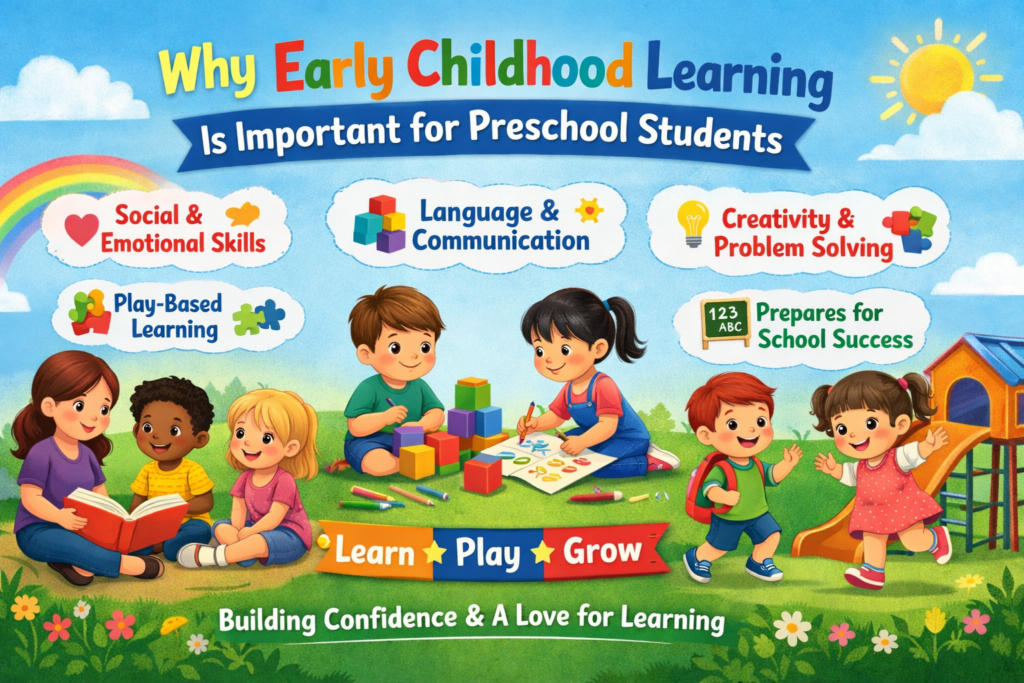
The early years of a child’s life are very important. During these beginning years, children learn the ways of thinking, talking, feeling, and ways of understanding the world. Even before entering the premises of formal schooling, children learn something new each day. Thus, early childhood learning for preschool students holds great significance. It lays a good foundation for future learning and growth.
Preschool is not just a place to keep your children busy for a few hours. It’s a place where kids learn some fundamental lessons that will help them in life in a safe, caring, positive atmosphere. This type of learning is carefully supported at Dr. Kishore’s Ratnam Schools, where equal importance is given to emotional development and basic learning skills. Let’s understand why these early years matter so much.
What Is Early Childhood Learning?
Early childhood learning focuses on children between the ages of two and five. At this age, children learn best through play and interaction. Remove the books and tests, learning happens through:
Stories and songs.
- Simple games and fun activities.
- Play with other children-shared toys.
- Drawing, coloring and any kind of creative work.
The method suits the nature of the child; hence it is interesting to him. There is no strain or stress on learning. Parents who want to understand the right time to begin this journey can also explore kids education planning: when to start and how to stay on track.
Why Preschool Education Is More Than Just Preparation
Many parents think preschool is only a step before real school. But preschool is much more than that. The importance of preschool education lies in how it helps children grow emotionally, socially and mentally. Children don’t only learn letters or numbers. They learn how to listen, follow instructions, share their feelings and solve small problems. These early skills help children do better when they move to higher classes later.
Key Preschool Education Benefits for Young Children
Let’s look at the main preschool education benefits and how they help children grow.
Social and Emotional Development
In preschool, children spend time with other children every day. This helps them learn how to:
- Share toys
- Take turns
- Ask for help
- Make friends
These experiences help children feel confident and emotionally strong.
Better Language and Communication Skills
Children hear and use words all day in preschool. They talk, listen to stories and answer questions. This helps improve:
- Vocabulary
- Listening ability
- Speaking clearly
When children can express themselves well, they feel more confident and understood.
Encourages Play-Based Learning for Kids
Children learn best when learning feels like play. That is why play-based learning for kids is an important part of preschool.
Through play, children learn:
- How to think creatively
- How to solve simple problems
- How to use their hands and body better
- How to make small decisions
Play helps children learn naturally, without fear of making mistakes.
Supports Healthy Preschool Child Development
Every preschool activity is planned to support preschool child development. This includes:
- Physical growth through movement and games
- Thinking skills through puzzles and activities
- Emotional growth through routine and care
This balanced learning helps children grow comfortably and confidently. Schools also support emotional awareness through calm routines and practices like mindfulness, which is explained in what is mindfulness for kids and its importance.
The Role of Nursery and Kindergarten Learning
Nursery and kindergarten classes softly structure the children’s day to make them get used to a simple routine. They slowly learn:
- Coming on time
- Class rules
- Listening to the teacher
- Completing small tasks
The organization of gentle routine sets contains no stress for readiness toward primary school. It makes them be able to set the environment for learning and becoming more independent.
Builds a Love for Learning Early On
A major benefit counted in favor of early education is that the child develops an interest in learning. If acquiring knowledge can be associated with fun and safety, then the child’s curiosity and interest will be maintained as he grows older. This love for learning cannot be forced later. It starts in the early years.
In preschool, learning happens through play, stories, songs, and activities. Because there is no pressure or fear of mistakes, children feel free to try again and again. This helps them build confidence and interest in learning.
If children enjoy learning, they will carry this positive attitude as they grow older. They will willingly participate in class and try new subjects and experiences that keep them motivated in school. No one can force a love for learning later in life, it begins during the early years, growing stronger with proper support and care.
They can also help at home by understanding the parent’s role in a child’s learning journey.
Helps Identify Learning Needs Early
Preschool teachers can observe the obvious signs at an early stage of:
- Difficulties in learning
- Delay in speech
- Challenges in socializing
Finding these, at first, makes the parents and teachers apply support to children appropriately and timely.
Prepares Children for Academic Success
Most children who undergo programs on early childhood learning for preschool students enter primary school with:
- Better concentration
- Improved communication skills
- Enhanced confidence
They are comfortable following instructions and taking part in class activities.
Final Thoughts
Early learning is not about pushing children too fast. It is about caring for them and helping them grow naturally. The importance of preschool education lies in giving children a safe place to learn, play and understand themselves. This is something thoughtfully followed at Dr. Kishore’s Ratnam Schools.
Preschools provide the best friendly programs to develop children’s emotional and social skills, cognitive and physical abilities through a combination of proper care and play-based routines involving kids in all aspects. A bright future is secured when heads start nurseries or kindergartens with positive reinforcement.
Make it simple at first! Allow them an easy, caring entry into becoming learners and they will turn out to be confident learners who love learning for life.