


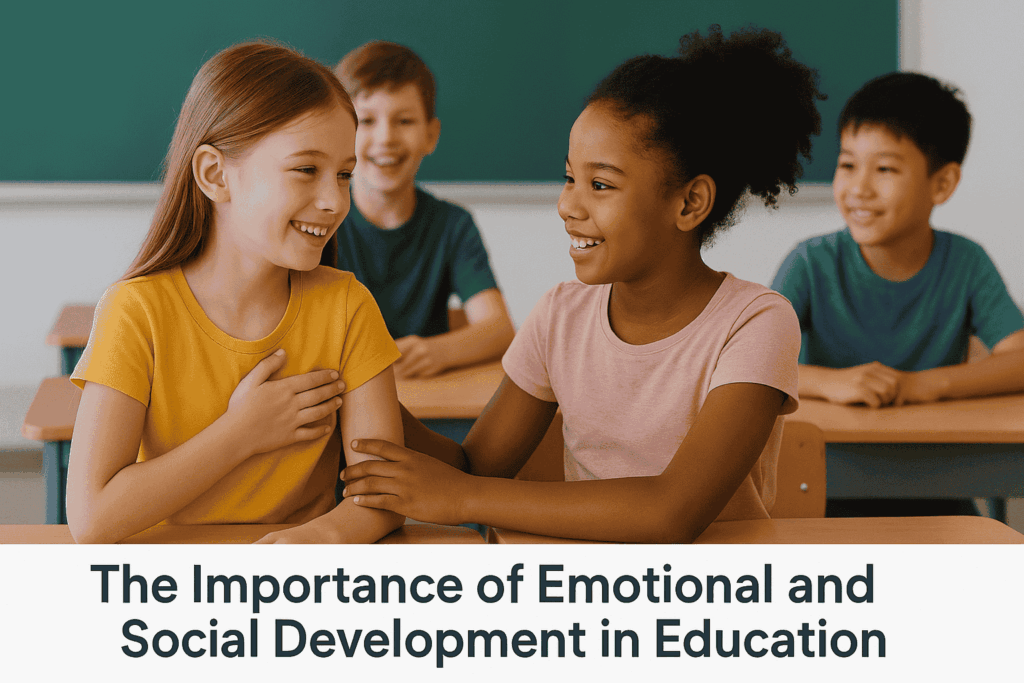
Learning is not all about reading books, doing sums, or memorizing facts. Proper education is more than academic achievement. It assists children in becoming confident, compassionate, and well-adjusted individuals. The most vital aspect of becoming such an individual is emotional and social development in education.
When schools emphasize both academics and personal development, kids are better able to be successful in all aspects of life. Let us consider why emotional and social development is so significant, how it relates to child development, and why schools nowadays have to provide special care for mental health in schools.
What is Emotional and Social Development?
Emotional and social development involves learning to recognize feelings, form good relationships, and act in ways that help oneself and others. It is a continuous process that begins early in life and goes on into childhood.
| Aspect | What It Means | Example in School Life |
| Emotional Development | Recognising, expressing, and managing emotions | A child learns to stay calm before exams |
| Social Development | Building relationships and understanding social rules | A student learns to share and play with classmates |
| Combined Growth | Balancing emotions and social behaviour | A child learns to respect friend’s opinions even when disagreeing |
This development does not occur automatically. It requires guidance, practice, and reinforcement from parents, educators, and friends.
Why Social Development in Education Matters
Schools are not simply where one learns lessons. They are where children spend most of their formative years. In the latter, social learning comes into play big time.
Some of the most important reasons why education’s social development is crucial:
- Develops teamwork skills: Kids learn to be together in group projects, games, and class discussions.
- Enhances communications: Being polite in speech, listening to others, and articulating ideas clearly becomes second nature.
- Promotes empathy: Children learn to connect with other’s emotions and are kind.
- Boosts confidence: Socialization empowers children to speak up in class and in other extracurricular activities.
- Prepares for the future: In careers and in life, success is based on the quality of relationships people manage.
When schools foster social development, they produce well-behaved and accountable citizens.
The Link Between Emotional Growth and Child Development
Each child is different. Some are outgoing, while others are reserved. Fostering emotional development is part of growing up.
How emotional wellbeing contributes to a child’s overall development:
| Area of Development | How Emotions Play a Role |
| Learning | A happy and relaxed child learns more efficiently and retains information better |
| Behaviour | Kids who know about their feelings are responsible in their behaviour |
| Friendships | Emotional stability assists children in making and maintaining friends |
| Problem Solving | Dealing with frustration helps children think creatively |
If their emotions are not addressed, children can suffer from a problem in adapting to a new situation. They can also have difficulty with stress and low self-esteem.
Mental Health in Schools – Why It Shouldn’t Be Overlooked
In the rapidly changing world of today, even young kids feel stressed, anxious, and under pressure. Therefore, it is extremely crucial to discuss mental health in schools whether it is a pre primary school in Tirupati.
Warning signs that a child might require emotional support:
- Abrupt decline in interest in studying
- Difficulty forming friendships
- Chronic anger or depression
- School avoidance
- Lack of confidence and fear of failure
When schools establish a safe haven, kids feel comfortable sharing their feelings. Teachers who are trained to observe emotional difficulties are able to intervene early, preventing larger issues down the road.
How Schools Can Support Emotional and Social Development
high school in Tirupati can do many things to ensure that students develop in a positive manner, both scholastically and personally.
Steps That Work Best
- Interactive learning: Role play, group activities, and themed discussions promote social skills.
- Life skills programs: Teaching children about problem solving, respect, and kindness is as vital as maths and science.
- Counselling support: School counselors assist children in dealing with stress and emotions.
- Promotion of arts and sports: Sports and the arts enable the child to be creative and develop confidence.
- Positive classroom environment: Patient and kind teachers listening to students make them feel important.
Examples of Programs That Help
| Activity | Emotional Benefit | Social Benefit |
| Group storytelling | Builds imagination and confidence | Encourages teamwork |
| Art and craft | Reduces stress and boosts self-expression | Creates sharing and cooperation |
| Sports and games | Teaches handling success and failure | Builds team spirit |
| Class discussions | Improves self-expression | Builds respect for different views |
These activities not only make learning engaging but also make students life-ready outside the classroom.
The Role of Parents and Teachers
Though schools have the central role to play, parents and teachers, as a team, can make a significant impact.
- Parents can spend time with kids, having open talks, and sharing small triumphs.
- Teachers can provide students with an opportunity to talk about feelings, offer advice, and serve as models of kindness and respect
If both cooperate, kids feel more balanced and safe.
Why This Matters in Tirupati Schools
Families in Tirupati are now searching for schools that emphasize not just academic outcomes but also the development of the child as a whole. Whether it is a primary school in Tirupati the demand for emotional and social growth remains the same. Right development in these areas prepares children to do well at every level of education.
Conclusion
Learning goes beyond grades and marks. Learning is about making children well-rounded human beings that can meet challenges with confidence and empathy. Social learning in education provides children with skills to manage emotions, form relationships, and become productive in society.
Dr. Kishore S. Ratnam Schools, believes that authentic learning is developing the heart and the mind. Through emotional development support, child development focus, and mental health promotion in schools, we work to prepare every student to lead a healthy, happy, and successful life.