


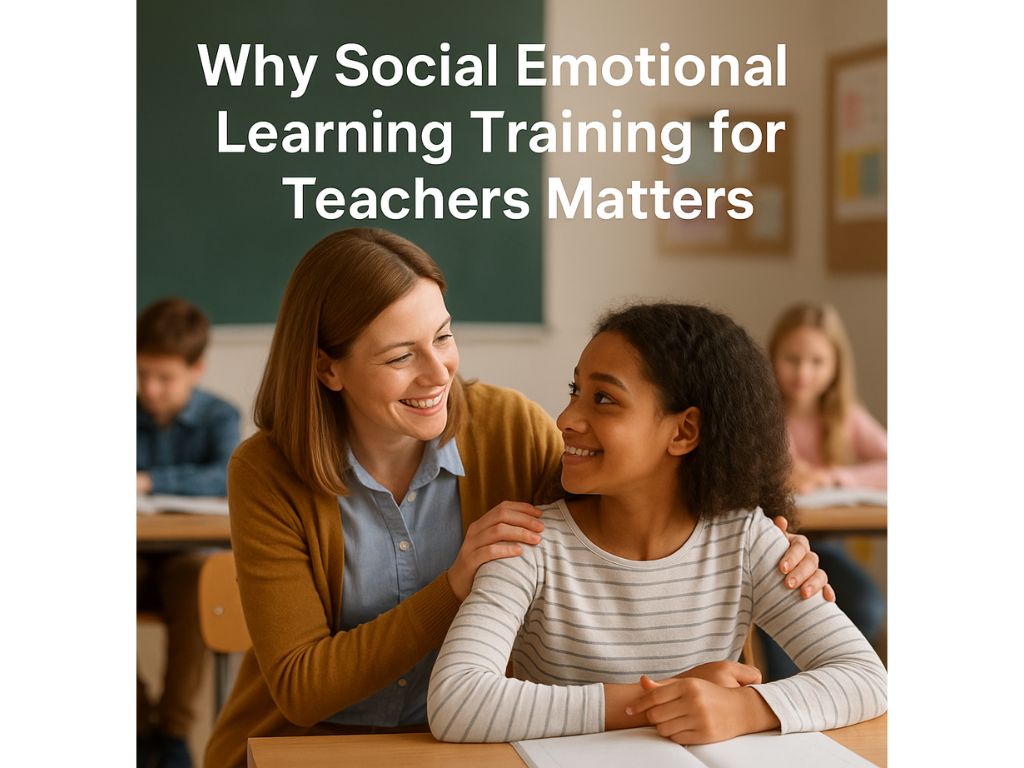
Remember your favourite teacher from school. Chances are, they weren’t just great at explaining math problems or grammar rules. They probably listened to you, made you feel safe and treated you with kindness. That is what made them unforgettable.
What this really shows is that teaching is more than delivering lessons. It is about connection. And that’s exactly where social emotional learning for teachers comes in and why training teachers in SEL is no longer optional, but necessary we will discuss in this blog.
What is Social Emotional Learning?
Social Emotional Learning is the process through which people, children and adults develop the skills to manage emotions. They build positive relationships, show empathy, set goals and make responsible decisions.
In simpler terms, social and emotional learning for teachers is about:
- Understand your own feelings
- Handle stress and conflict
- Get along with others
- Make thoughtful choices
For students, these skills are the foundation for doing well not just in school, but in life. But here is the key point: teachers need these skills too, both for themselves and for their students.
Why Teachers Need Social Emotional Learning Training
We expect teachers to wear many hats: educator, mentor, guide, referee and sometimes even therapist. And while most teacher training programs focus on lesson planning and classroom management. They often skip one critical area, emotional literacy. That is a big miss, and this is why social-emotional learning training for teachers is needed.
Because a teacher’s emotional state directly influences the classroom environment. A stressed-out, unsupported teacher will naturally find it hard to remain patient, deal with classroom dynamics or establish trust with students. Eventually, this can cause burnout, constant conflict, and a disconnection between teachers and learners.
Alternatively, a teacher who is socially and emotionally trained can more effectively deal with their own feelings and identify what children may be experiencing, even if it is not immediately apparent. This awareness leads to:
- Modelling emotional regulation that students can mirror
- Building stronger, more respectful relationships
- Creating a learning space that feels emotionally safe
- Responding to challenges with empathy instead of frustration
In short, social emotional learning training isn’t just about improving classroom outcomes; it’s about supporting the human behind the role of “teacher.” When educators feel grounded and emotionally prepared, they teach with more confidence, compassion, and resilience.
This is especially true for growing educational hubs like schools in Tirupati, where academic progress goes hand in hand with a strong focus on student well-being. As these schools evolve, SEL is becoming central to building emotionally healthy, connected classrooms.
What SEL Training Actually Teaches Teachers
So what happens in social and emotional learning for teachers? It’s not just about learning how to help students regulate emotions. It’s about building those skills in teachers first.
Here’s what’s usually included:
1. Self-Awareness
Teachers are taught to identify their own emotions, triggers and thought processes. This enables them to respond instead of react when under pressure.
2. Self-Management
Mindfulness, stress management and emotional control are some of the techniques that enable teachers to remain calm and centred even on bad days.
3. Social Awareness
Teachers learn to pick up what their students may be experiencing, even if it is not expressed verbally. This fosters empathy.
4. Relationship Skills
From conflict resolution to trust-building, teachers learn how to build stronger relationships with parents, students and colleagues.
5. Responsible Decision-Making
Teachers are taught to make conscious, ethical decisions, whether they are resolving a classroom conflict or managing a student’s behaviour.
Basically, social-emotional learning training for teachers develops emotional intelligence first, so teachers can then naturally and effectively pass on the skills to students.
How SEL Training Impacts Teaching and Learning
Without SEL Training | With SEL Training |
High teacher stress and burnout | Improved emotional resilience and stress management |
Reactive discipline methods | Thoughtful, empathetic responses to student behaviour |
Weak classroom relationships | Stronger bonds with students and better classroom trust |
Focus on rules and control | Focus on connection, support, and student growth |
Poor conflict resolution | Improved skills in handling disagreements and restoring harmony |
Limited student engagement | Higher student participation and motivation |
Students feel misunderstood or unseen | Students feel heard, respected, and emotionally safe |
Teachers feel isolated and unsupported | Teachers feel part of a caring, collaborative school community |
The Classroom Reality is More Than Just Academics
Today’s classrooms are more complex than ever. Teachers aren’t just dealing with math tests and science projects. They’re dealing with:
- Students with anxiety or trauma
- Bullying and peer pressure
- Learning differences and behavioural issues
- Social media drama that spills into the school day
Many students come to school carrying emotional burdens that affect how they learn, behave and interact. If a teacher doesn’t have the tools to notice and respond to these emotional needs, the academic goals can quickly fall apart.
Social emotional learning for teachers gives the framework to see the whole child, not just their grades.
That’s why schools in Nellore that integrate SEL into their teacher development plans are seeing real changes. Classrooms are calmer, students more engaged, and teachers more confident in handling emotional dynamics.
Investing in SEL Training is Investing in the Whole School
The impact of SEL training doesn’t stop at the classroom door. When entire schools adopt SEL programs and train their teachers, the culture changes.
You’ll see:
- Better collaboration among staff
- Fewer suspensions and disciplinary issues
- Improved relationships between teachers and parents
- Stronger sense of community and belonging
It becomes a school where everyone, students and staff, feel emotionally safe and supported. That’s when true learning can happen.
How to Bring SEL Training to Your School
If you’re a school leader or educator looking to bring social-emotional learning training for teachers, here are a few steps to get started:
1. Start with buy-in
Share the benefits with teachers. Let them know it’s about supporting them, not adding more to their plate.
2. Choose a quality SEL program
Look for programs with evidence-based practices, clear goals, and experienced trainers.
3. Make it ongoing, not a one-time workshop
Like any skill, SEL needs practice and reinforcement. Offer ongoing coaching and check-ins.
4. Model it at the leadership level
School leaders should also participate in SEL training to lead by example.
5. Integrate it into the school culture
Make SEL part of staff meetings, lesson planning, and professional development, not an add-on.
Final Thoughts
Social emotional learning for teachers isn’t just a “nice-to-have” anymore. It is a must-have. Training teachers in social learning isn’t about turning them into counsellors. It is about giving them the emotional tools they need to teach, lead and connect more effectively with their class students.
In classrooms where teachers are emotionally aware, students feel safer, relationships grow stronger, and learning becomes more meaningful. At the end of the day, students remember how teachers made them feel.
Social emotional learning training helps make sure they feel seen, heard and supported every single day. At Dr. Kishore’s Ratnam Schools, we believe in nurturing not just minds, but hearts too, because emotionally empowered teachers create classrooms where every child can thrive.