


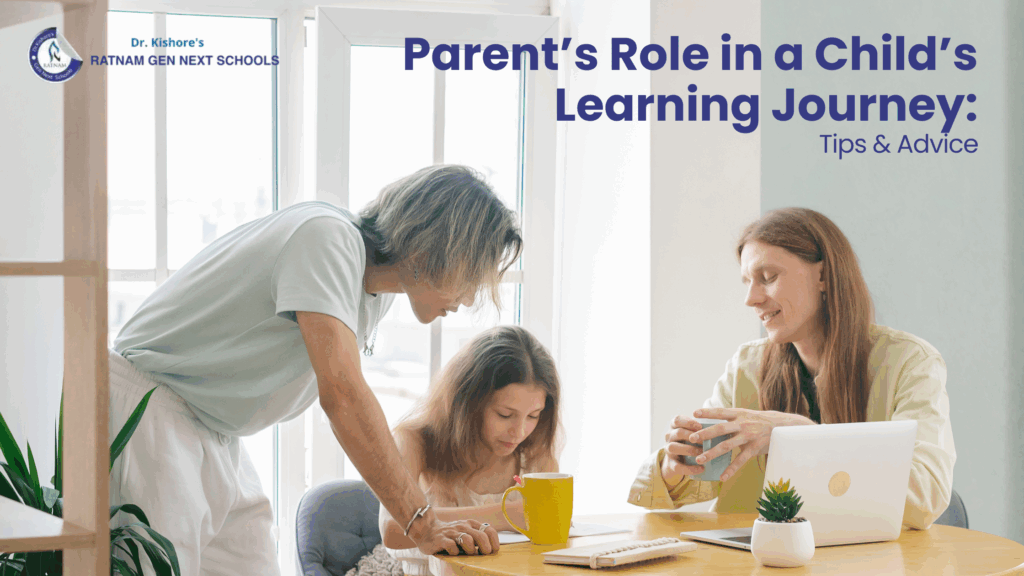
School alone can’t shape a child’s future. Children spend more time at home than in classrooms. And the way parents interact with them during those hours plays a huge part in their growth. The truth is, the role of parents in education is foundational.
You don’t need to be a trained teacher to make a difference. What matters more is how you support, listen, encourage and guide your child through their learning years. Whether they’re struggling with math, discovering a love for science, or trying to write their first story, your involvement matters.
In this blog, we’ll explore how can you support your child’s learning, how your actions at home shape your child’s relationship with education, and what small changes can lead to big results.
Why Is the Role of Parents in Education So Important?
Children learn in layers. Yes, they get information at school. But understanding, motivation, and confidence? That often begins at home.
Even the best schools in Tirupati can’t do everything. If a child goes home and no one helps or cares, learning gets harder. But if parents help and show interest, even small lessons can feel fun and exciting.
The role of parents in education includes:
- Reinforcing what’s taught in school
- Providing emotional support
- Creating a learning-friendly environment
- Instilling discipline and time management
- Encouraging curiosity over rote learning
When home and school are in sync, child education becomes a smoother, more meaningful journey.
How Can You Support Your Child’s Learning?
Let’s break this down into real actions. Below is a table of strategies with explanations to help you play an active, balanced role in your child’s education.
Parental Strategies for Better Learning
Strategy | What to Do | Why It Works |
Encourage Reading | Let your child read storybooks, comics, or news aloud | Builds vocabulary and comprehension |
Ask Open Questions | “What was interesting at school today?” instead of “Did you study?” | Encourages conversation and deeper thinking |
Create a Study Routine | Set fixed homework and playtime | Builds structure and time management skills |
Praise Effort, Not Just Results | Say “I’m proud of how hard you worked” | Builds resilience and motivation |
Explore Real-Life Learning | Use shopping, cooking, or nature walks for mini-lessons | Connects school concepts to everyday life |
Communicate with Teachers | Attend meetings, ask for feedback | Builds collaboration between home and school |
Limit Screen Time | Set boundaries on mobile and TV use | Reduces distractions and improves focus |
These habits don’t need to be perfect. Consistency matters more than intensity.
Create a Positive Learning Atmosphere at Home
One of the simplest ways to support child education is to make your home feel like a space where learning is valued.
Start with small shifts:
- Keep books, puzzles, and learning tools visible and accessible
- Have a quiet corner for reading or homework
- Celebrate small academic wins with enthusiasm
- Let your child see you learning to read, exploring, or solving problems
This kind of environment tells your child: “Learning isn’t just a school thing. It’s part of life.”
Be Present, Not Interfering
Here’s the mistake many parents make, they confuse support with pressure.
Asking your child 10 times a day if they’ve finished their homework won’t help. But sitting with them to help them plan their work or review tough topics? That builds confidence.
Wondering how you can support your child’s learning without hovering?
Try this:
- Ask them to teach you what they’ve learned.
- Encourage them to ask questions even if you don’t know the answers.
- Let them make mistakes without criticism.
- Share stories of your own struggles and how you handled them.
It is not about doing things for them. It’s about showing that you’re walking the path with them.
Keep Communication Open With Your Child and Their School
You don’t have to wait for report cards to check in.
Talk to your child daily, not just about what they studied, but about how they felt at school. Did they enjoy the lesson? Were they confused or bored? Are they worried about something?
And check in with teachers, too. The schools in Tirupati often encourage parent-teacher interaction as a core part of learning. Use that, ask where your child is doing well and where they need help. Share what’s working at home, so the teacher gets a full picture.
Adjust Your Approach As Your Child Grows
The role of parents in education doesn’t look the same for a 6-year-old and a 16-year-old.
Young children need more direct support to help them learn to read, do basic math, or write neatly.
Older children need more emotional support, reminders to stay focused, help with time management, and encouragement when school feels overwhelming.
In both cases, your belief in their potential matters more than any grade.
Choosing the Right School Plays a Role Too
Parental involvement makes a massive impact. But it also matters where your child is learning.
A school that encourages open communication, supports holistic development, and maintains high academic standards helps parents feel confident and included.
Looking for one of the best high schools in Tirupati? Start by checking whether they offer:
- Personalised attention to each student
- CBSE curriculum with balanced academics and activities
- A welcoming attitude towards parent participation
For many families, the best schools in Tirupati are those that balance academic excellence with emotional intelligence and values-based education.
Also, if you’re focused on CBSE standards, the best CBSE schools in Tirupati provide structured learning with national-level recognition. This can open doors for competitive exams, higher education, and all-around growth.
Final Thoughts
The role of parents in education is not about taking control. It’s about creating the conditions where learning feels safe, fun, and meaningful. Your attitude, attention, and actions shape your child’s entire relationship with knowledge.
If you’re looking for a school that understands the value of parent involvement, consider Dr. Kishore’s Ratnam Schools. Recognised as one of the best CBSE schools in Tirupati, we believe learning is strongest when home and school work together.
With modern infrastructure, experienced educators, and a holistic approach to child education, Dr. Kishore’s Ratnam Schools is a place where your child’s journey is supported at every step by us and by you.