


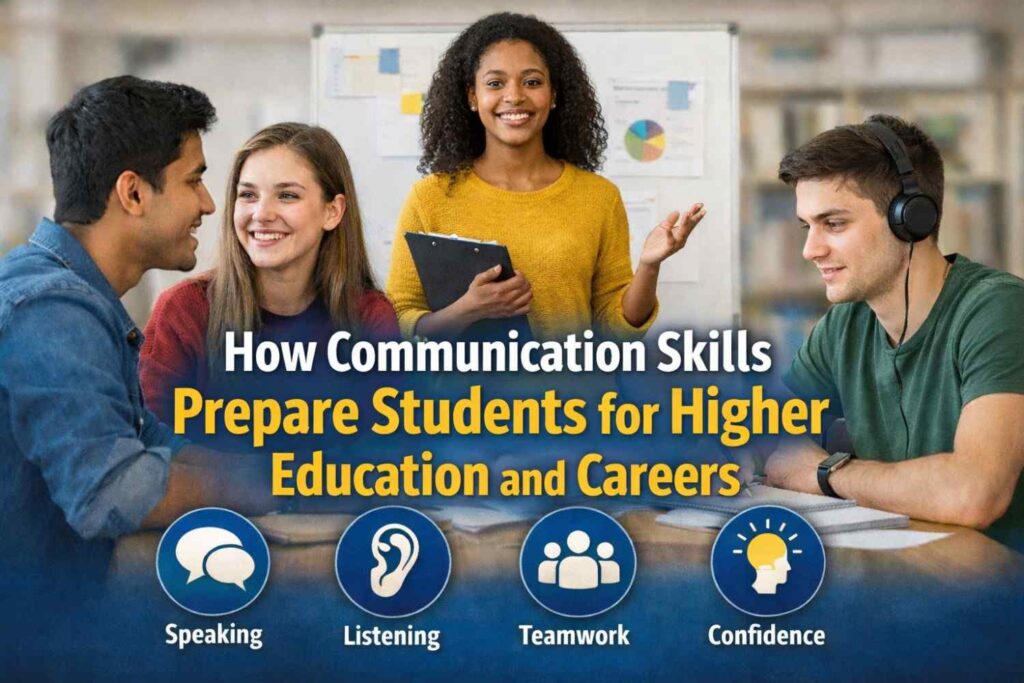
Many students believe success comes only from good marks. Marks matter, but they are not enough for life after school. To do well in college and in future jobs, students also need soft skills that help them speak clearly, work with others, and build confidence. One of the most important soft skills is communication skills.
From classroom presentations to job interviews, communication shapes how students learn, think and grow. This is why teach language, speaking, and expression along with academics. When students learn how to talk, listen and share ideas, they become better prepared for the future.
Why Strong Communication Skills Help Students Succeed
Communication isn’t only about talking. It involves listening, understanding, expressing ideas, and utilizing the appropriate language for the intended audience. Students with great communication abilities can explain their meaning in simple terms.
- Ask inquiries without fear.
- Make friends and develop relationships.
- Works better in groups.
- Adjust to new environments.
Communication also increases confidence. A confident student engages in class, contributes ideas to projects and occasionally becomes a leader. Confidence does not imply being loud. It means being straightforward, calm and respectful.
The Role of Listening Skills
Good communication starts with listening. Many students focus on speaking but forget the importance of listening skills. When a student listens carefully, they understand instructions faster, follow lessons better and avoid mistakes.
For example, during group work, students must listen to each other to divide tasks and finish on time. With strong skills, teamwork becomes smoother and misunderstandings are reduced. Listening is also essential in future workplaces. Employees who listen well gain trust, build strong relationships and solve problems calmly.
Teachers use activities like discussions, storytelling, roleplay and feedback sessions to improve both speaking and listening skills. This makes learning lively and interactive.
Communication Skills for College Level Learning
College life presents new problems. Students travel to larger classrooms, meet individuals from other backgrounds and learn at a faster rate. Communication allows them to manage these changes more smoothly.
Class Participation and Discussion
In college, students are required to express themselves and participate in arguments. Those with strong communication skills contribute freely, ask thoughtful questions, and learn from others.
Academic Writing
College students write essays, reports and research papers. Communication makes writing clean and organized. Teachers value work that is simple, logical and easy to read.
Networking and Social Learning
College offers many chances to meet mentors, seniors, and new friends. Students who communicate clearly create connections that may lead to internships, projects or guidance later.
In simple terms, communication enables students to transition from guided school life to independent college life with less stress and greater chances.
Use Communication Skills to Work Smarter and Better
Communication becomes increasingly necessary after graduation. Modern organizations seek individuals who can communicate, write, exchange ideas, and solve problems together. Strong communication skills are useful during:
Job Interviews
In interviews, candidates talk about who they are, what they learned and why they want the job. A clear speaker leaves a better impression than someone who stays silent or confused.
Teamwork and Meetings
Most jobs require teamwork. Whether in an office, school, hospital, shop or field, workers must speak clearly and listen carefully. This reduces mistakes and improves productivity.
Leadership and Responsibility
Leadership begins with communication. A leader must explain plans, guide a team and motivate others. Without communication, leadership fails.
How Communication Helps Students
| Skill Area | Helps in Higher Education | Helps in Careers |
| Speaking | Discussions, presentations, networking | Meetings, interviews, customer service |
| Listening | Understanding lectures and feedback | Teamwork, problem-solving, project management |
| Writing | Essays, assignments, email communication | Reports, documentation, proposals |
| Confidence | Asking questions, joining clubs | Leadership, negotiation, decision-making |
| Relationship Building | Making friends and study groups | Building trust with colleagues and clients |
How Schools Help Students Build the Skill
Schools have an important role in teaching communication. Not all youngsters learn it spontaneously, so practice and instruction are important. Schools assist by using:
- Classroom conversations.
- Storytelling and role play
- Group activities and projects.
- Reading and writing tasks.
- Active Listening Exercises
- Feedback and Reflection Sessions
These activities encourage kids to talk correctly, listen attentively, and slowly boost their confidence.
Tips for Students to Improve
Students can practice outside of the classroom. Here are some easy habits:
- Speaking with peers and teachers.
- Read books and articles.
- Writing brief notes or diaries
- Practice public speaking.
- Asking questions in class.
- Paying attention while others speak
Small daily efforts lead to significant improvements in communication over time.
Communication: A Life-Long Strength
Adults use communication to collaborate with coworkers, assist customers, educate children, and manage families. Good communication fosters connections, mitigates conflict, and generates new opportunities.
Students with good communication skills and the ability to listen well can achieve more than just passing exams. They learn how to communicate, understand people, and make informed decisions.
Conclusion
Marks are important. They are only part of what students need to succeed. Communication helps students speak with confidence, listen with care, and respond appropriately at school, college, or workplace. If inculcated at an early stage in a student’s life, it provides him/her with long lasting benefits.
Dr. Kishore’s Ratnam Schools prepare students to face academic challenges as well as real life situations through communication skills. Apart from the fact that communication enhances student performance, it transforms them into confident, respectful and responsible future ready individuals.