


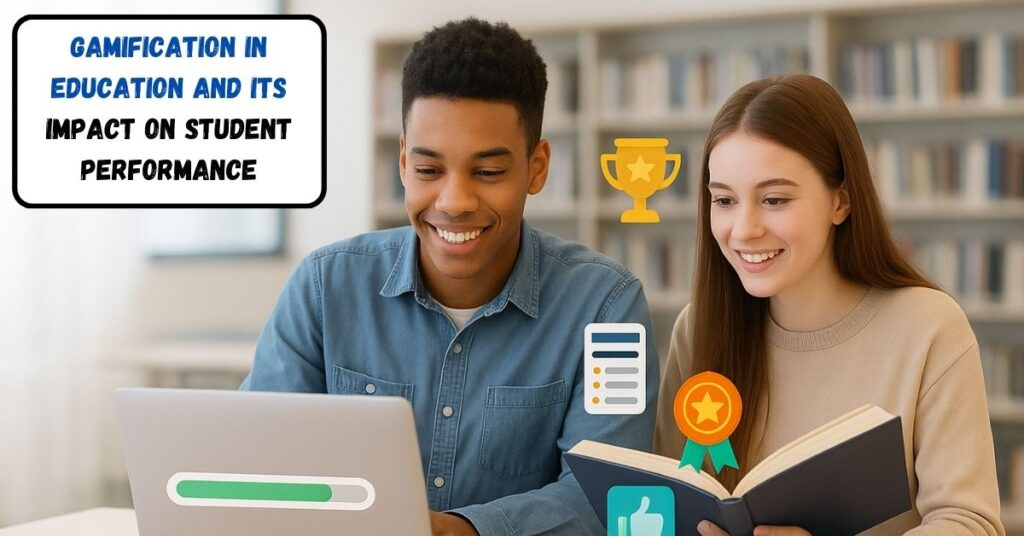
Education has come a long way from rote learning and endless textbooks. Today, teachers and schools are constantly looking for ways to make learning more engaging, meaningful and effective. One approach that has gained immense popularity over the last decade is gamification in education. This method uses elements of games such as rewards, challenges and progress tracking to motivate students, making learning both fun and effective.
Gamification isn’t just about turning lessons into games. It is about using game mechanics thoughtfully to encourage participation, curiosity and achievement. For students, this approach can transform their entire learning experience.
What is Gamification in Education?
Gamification in education is the process of incorporating game-like elements into the learning and instruction process. This may mean giving points for submitting assignments, establishing a leaderboard for creating a sense of friendly competition, providing badges for achievements or developing problem-solving activities that resemble levels in a video game.
The goal isn’t to replace conventional learning strategies but to reinforce them. Through the addition of elements that encourage students to feel engaged and rewarded, gamification prompts them to interact more intensely with the curriculum. It has been proven that when students are engaged and incentivized, they retain and understand subjects much more effectively.
Why Gamification Works
Here’s what actually makes gamification so effective: it draws on deep human psychology. Games naturally prompt people to set goals, stick with things and figure out problems. They reward effort as much as accomplishment and they give immediate feedback, something conventional classroom strategies often don’t.
In the classroom, gamification assists students in:
- Remaining motivated by having clear objectives and milestones.
- Reinforcing their progress and enjoying little victories which is confidence-building.
- Working together with friends while competing against each other in friendly challenges.
- Build problem-solving and critical thinking skills in a systematic, fun manner.
Through the interaction of learning, gamification creates curiosity and passion for learning that can significantly enhance student performance in the long term.
Implementing Gamification Curricularly
To be truly effective, gamification in education should be integrated curricularly, not just added as a fun activity. This means designing lessons, assignments and assessments with game elements built into the learning objectives. For example:
- Math lessons could include “level-ups” for mastering each concept.
- Language exercises could offer badges for vocabulary milestones.
- Science projects could involve challenges where students “unlock” the next experiment after completing the previous one.
When gamification is curricularly aligned, it enhances understanding rather than distracting students. It makes every activity purposeful, ensuring that students are achieving academic goals while enjoying the process.
Many Schools in Tirupati are also getting more and more aware of the benefits of gamification in learning. Dr. Kishore’s Ratnam Schools are among those that have started using these practices to develop interactive learning spaces. Through gamification curricularly, they are not just making the lessons more interactive but also empowering students to own their learning process.
Impact on Student Performance
The impact of gamification in education is evident. Students in gamified classrooms are likely to exhibit:
- Increased levels of participation and engagement.
- Enhanced problem-solving and critical thinking abilities.
- Improved concept retention as a result of active learning experiences.
- Increased motivation to do assignments and learn topics outside of class.
Gamification has one of the greatest effects on students who have difficulty learning the conventional way. There are various channels through which they can learn concepts at their own level. The reward structure incentivizes them to continue trying and immediate feedback enables them to immediately correct errors.
Making Gamification Work
While gamification is valuable in many ways, it’s vital that educators use it wisely:
- Make sure game mechanics support learning goals.
- Don’t overdo competition, which will turn off some students.
- Offer a mix of individual and group challenges.
- Use technology tools judiciously to supplement, not substitute, conventional learning.
When executed properly, gamification in education is a highly effective means to improve both academic achievement and character development.
Why Choose Dr. Kishore’s Ratnam Schools
Dr. Kishore’s Ratnam Schools in Tirupati are at the forefront of gamification implementation at the curriculum level. They know that children learn most effectively when they are motivated, engaged and challenged appropriately. Through a powerful academic background combined with innovative pedagogies such as gamification, these schools ensure students are equipped to crack exams as well as tackle real-world problems.
From engaging lessons to computerized learning systems and gamified exams, we turn learning into an experience that students anticipate daily. Their method not only enhances student performance but also fosters creativity, critical thinking and lifelong learning attitudes.
Conclusion
Gamification in education is more than just a trend. It is a transformative approach that can positively impact student performance when applied curricularly. Making learning fun, interactive and rewarding encourages students to be actively involved and pursue their full potential.
Dr. Kishore’s Ratnam Schools in Tirupati are adopting this new face of schooling. They prove that when gamification is implemented with careful planning, students not only learn, they flourish.
Ultimately, education needs to be something other than memorization; it needs to be a journey. Gamification makes the journey fun, significant and productive for all students.