


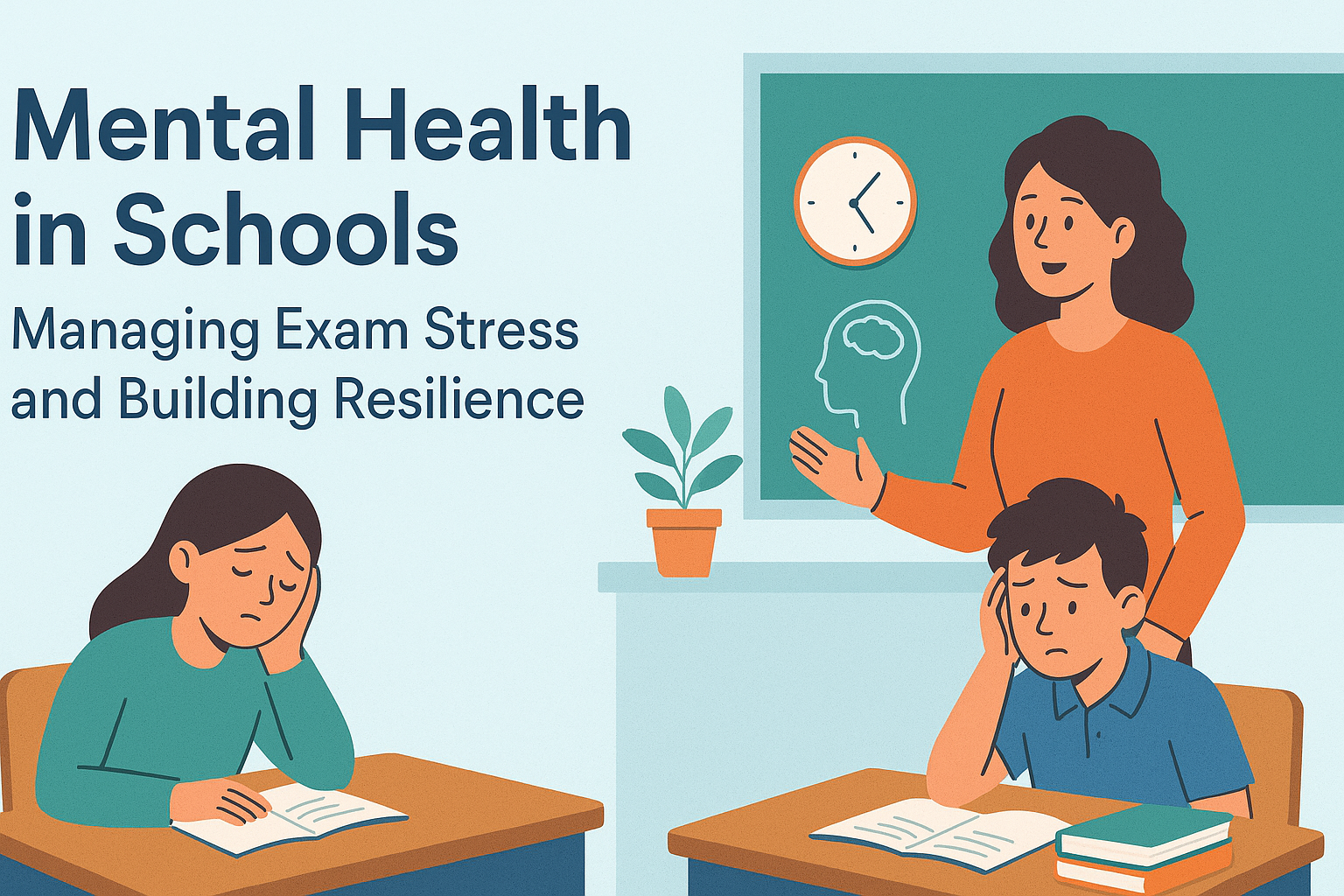
Walk into any classroom during exam season and you will notice the change in the air. Some students look calm, others restless and a few visibly anxious. The tension is real. Exams test knowledge, yes, but they also test a student’s emotional strength. Therefore, mental health in schools is no longer optional. It is necessary.
This blog unpacks why exam stress hits so hard, how resilience can be built and what schools, parents and students can do to make the journey healthier.
Why Mental Health in Schools Deserves Attention
For a long time, education was measured only by grades and ranks. But a brilliant student struggling silently with anxiety is not truly thriving. Mental health in schools isn’t about replacing academics. It is about making sure children can learn, grow and face challenges without breaking down.
Consider that schools shape not just future professionals but also future citizens. If they leave with knowledge but not the ability to manage pressure, we’ve missed something important.
What Exam Stress Looks Like
- Exam stress doesn’t always show up the same way.
- A usually cheerful student may suddenly withdraw.
- Another might study late into the night but remember little the next morning.
- Some may complain of stomach aches, headaches or simply say they don’t feel like themselves.
Stress often comes from high expectations, comparisons with others or fear of letting family down. Left unchecked, it can chip away at confidence. Therefore, mental health support in schools makes such a difference; it tells students they don’t have to carry this burden alone.
Building Resilience: A Skill for Life
Exams come and go. Resilience stays. It is the ability to bounce back when things don’t go as planned. And let’s be honest, no one scores perfectly every time.
Resilient students:
- Accept that mistakes happen.
- Look for solutions instead of spiraling into fear.
- Balance study with rest, exercise and friendships.
- Celebrate progress, not just results.
Resilience can be taught. Teachers who encourage effort, parents who praise persistence and schools that normalize setbacks all play a role in helping students become mentally stronger.
Teachers: The First Line of Support
Teachers are often the first to notice changes in a student’s behavior. A sudden drop in participation, unusual quietness, or constant worry can all be signs of exam stress.
Support doesn’t always mean grand interventions. Sometimes it’s as simple as:
- Starting class with a two-minute breathing exercise.
- Reminding students that one exam doesn’t define their future.
- Keeping an open door so children feel safe sharing their concerns.
When classrooms are emotionally safe, learning naturally becomes easier. Student mental health improves when teachers model calmness and empathy alongside academics.
Parents: Reducing the Pressure at Home
Parents mean well, but pressure at home can sometimes make exam stress worse. Children may fear disappointing their families more than failing the exam itself.
What helps instead?
- Listening with patience when children vent.
- Avoiding constant comparisons with siblings or classmates.
- Creating a healthy study routine with breaks for play and sleep.
- Reminding children that exam test preparation is not self-worth.
When home becomes a space of encouragement instead of judgment, students feel less overwhelmed.
The Role of Mental Health Awareness in Schools
Creating mental health awareness in schools is about changing the culture, not just hosting an annual workshop. It is about making well being part of everyday conversations.
That can look like:
- Posters that encourage students to speak up when stressed.
- Student-led support groups with teacher guidance.
- Access to counselors who understand the pressures of adolescence.
- Activities like yoga, art or music that help release tension.
When children see that mental health is taken seriously in school, they learn it is okay to seek help and talk about struggles.
Practical Ways Schools Can Provide Support
Not all families can afford outside counseling, which makes mental health support in schools critical. Schools can make a real difference with small but meaningful steps:
- Have counselors available during peak exam months.
- Train teachers to identify early warning signs of burnout.
- Create quiet corners where anxious students can reset before a test.
- Regularly hold sessions where parents and teachers share strategies.
These measures help students feel that exams are challenges to face, not storms to survive.
Dr. Kishore’s Ratnam Schools: Where Care Meets Learning
At Dr. Kishore’s Ratnam Schools, education is not just about grades. It is about nurturing the whole child. That means balancing academics with a focus on emotional well being.
The schools integrate practices like mindfulness, stress management activities and open counseling opportunities. By recognizing the importance of mental health in schools, the brand ensures that students are confident, balanced and ready for the future.
Parents looking for the best high schools in Nellore, or options like primary school Nellore, pre primary schools Nellore, or play schools in Nellore, often choose Dr. Kishore’s Ratnam Schools because of this balanced approach.
By making student mental health a priority. The school is a model of the way schools can equip young people for exams as well as life after them.
Advice for Students: Managing Exam Stress
These are some tried and tested methods that can be followed by students independently:
- Plan in advance: Break study periods rather than cramming.
- Get your body moving: Even a short 15-minute walk refreshes the mind.
- Sleep tight: Rest is as essential as revision.
- Stay in touch: Chat to friends or family when stress becomes overwhelming.
- Emphasis on effort, not grade: Remind yourself that exams are part of your experience, but only part of it.
Closing Thoughts
Exams are stressful, but stress doesn’t need to overwhelm. By putting mental health at the forefront in schools, we equip children with the tools to cope with pressure with resilience and confidence. Teachers provide the pathways, parents encourage them and schools make the atmosphere where achievement isn’t solely about marks, it’s about balance.
If you are searching for pre primary schools Nellore or play schools in Nellore, the Dr. Kishore’s Ratnam Schools show how education can be reimagined when emotional well being and academics go hand in hand. Because in the long run, a child who learns resilience is far better prepared for life than one who only learns to memorize.